
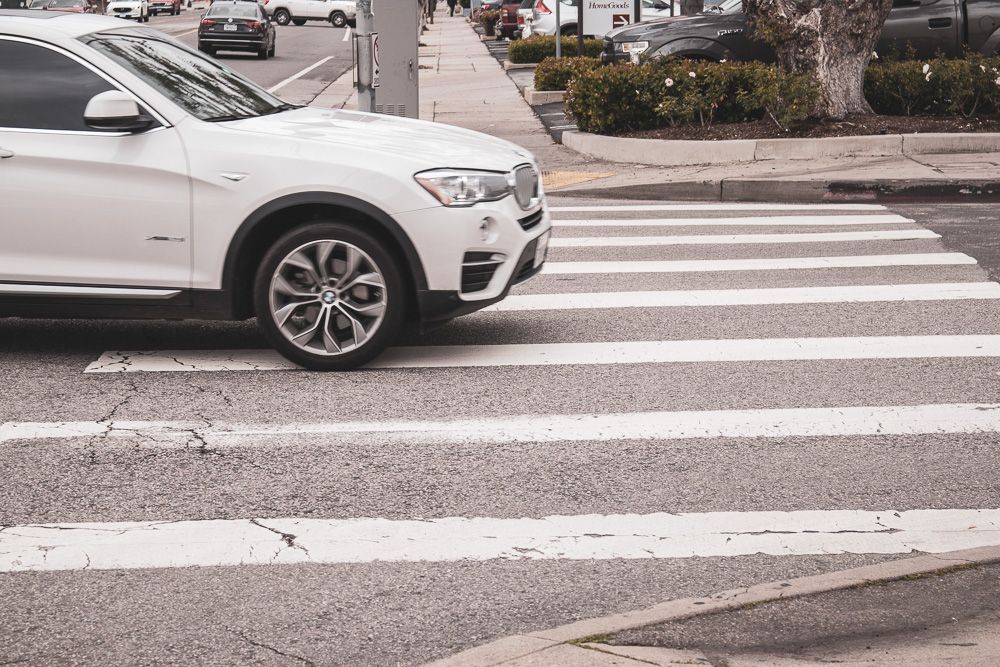
Omaha is still very much a city where people walk: to the bus stop, through Midtown, along Dodge Street, around the Old Market. But for all the foot traffic those neighborhoods see, certain roads keep showing up in the city's crash data for the wrong reasons: too many pedestrians hurt, and too many killed. That pattern hasn't gone unnoticed at City Hall. Through its Vision Zero Action Plan, Omaha has already flagged several high-risk corridors where conditions put walkers in danger. That matters beyond public safety; when a pedestrian is seriously injured on one of those streets, the state of the road itself can become a central question in determining who bears responsibility. What Does Omaha’s Vision Zero Data Reveal About Pedestrian Risk? Since Omaha’s Vision Zero Action Plan relies on documented crash statistics, city officials have publicly identified where severe crashes happen most often. Planning data shows that nearly half of all fatal and serious injury crashes occur on only a small percentage of city roads . Omaha later created a High Injury Network to study those corridors and prioritize future safety improvements. Named corridors include Ames Avenue between Florence Boulevard and 72nd Street, Cuming Street from Northwest Radial Highway to 72nd Street, and portions of West Maple Road near Interstate 680. City records have also shown that more than 62 percent of fatal and serious injury crashes occur at intersections. While trails and sidewalks remain safer overall, most severe pedestrian crashes still happen on busy city streets with heavier traffic flow. Those findings continue shaping Vision Zero Omaha pedestrian rights discussions tied to roadway safety planning. Why North and South Omaha Continue Seeing Higher Pedestrian Injury Rates Many serious crashes occur east of 72nd Street, North and South Omaha continue appearing prominently in traffic safety studies. Omaha planners have linked part of the disparity to older roadway infrastructure and higher rates of walking and transit use in areas where fewer households rely on personal vehicles. The Ames Avenue corridor has repeatedly appeared in public safety discussions involving pedestrian injuries and dangerous roadway conditions. City data documented numerous severe crashes along portions of Ames Avenue over several years. Omaha later secured federal funding to study additional safety improvements along the corridor. Meanwhile, Blondo Street, Cuming Street, and Douglas Street have also appeared in Vision Zero planning tied to elevated pedestrian injury risks. Transportation authorities reviewed years of crash data before formally identifying those corridors as safety concerns. How Can Dangerous Road Conditions Affect a Pedestrian Injury Claim? When a roadway hazard contributes to a pedestrian collision, liability may extend beyond the driver involved in the crash. Missing crosswalk protections, poor lighting, damaged sidewalks, and obstructed visibility can all become part of a legal investigation. An Omaha dangerous road accident lawyer may review whether those conditions contributed to the incident.fffffffffffffffffff Although drivers remain central to pedestrian injury claims, government agencies still carry responsibilities tied to roadway maintenance and traffic safety. Those responsibilities may later become part of an Omaha road defect personal injury claim. If roadway design affected visibility, crossing safety, or vehicle speeds near an intersection, those conditions may influence how fault is analyzed after the crash. Dangerous infrastructure sometimes becomes an important factor during settlement discussions and litigation. Why the Nebraska Political Subdivisions Tort Claims Act Matters After a pedestrian injury involving a public roadway, Nebraska law applies different rules to claims against government entities. The Nebraska Political Subdivisions Tort Claims Act controls many negligence claims involving cities, counties, and local agencies. Under Nebraska statute 13-919 , injured parties generally must submit written notice within one year from the date the claim accrued. That deadline is much shorter than Nebraska’s standard four-year personal injury statute of limitations. Missing the notice deadline may prevent an injured person from pursuing compensation against a government entity. Before a lawsuit can move forward, the claim must also meet procedural requirements involving notice content and proper filing with the correct office. A notice of claim Nebraska government injury case often requires early investigation and detailed documentation. Does Prior Knowledge Help Prove Government Negligence in Nebraska? If a government agency already knew about a dangerous roadway condition before a crash occurred, that prior knowledge may become legally important during a negligence case. Nebraska law recognizes that agencies controlling public property may have duties tied to warning about hazards or addressing known dangers. Since Omaha’s Vision Zero planning contains detailed crash records and corridor studies, those materials may later become relevant evidence in certain pedestrian injury claims. Prior knowledge dangerous road liability Nebraska cases sometimes focus on whether officials had already identified repeated crash patterns before the incident occurred. For example, Ames Avenue has appeared repeatedly in official safety planning tied to severe crash risks. Blondo Street, Cuming Street, and Douglas Street have also been discussed in public safety studies connected to pedestrian dangers. Those findings do not automatically establish liability, but they may still become relevant when reviewing whether hazards were already documented before the crash. Frequently Asked Questions: Pedestrian Accidents in Omaha Can you sue the City of Omaha after a pedestrian accident on a public road? Yes. Nebraska law allows injured parties to bring negligence claims against government entities under the Nebraska Political Subdivisions Tort Claims Act if procedural requirements are followed properly. What is the notice deadline for filing a government injury claim in Nebraska? Nebraska law requires written notice within one year of the date the claim accrued. That deadline is shorter than the four-year statute of limitations that applies to many ordinary personal injury claims. Does Vision Zero data help a pedestrian injury claim in Omaha? It may become relevant in some situations. Government planning documents identifying dangerous corridors or repeated crash patterns could potentially help show prior knowledge of roadway hazards before the collision occurred. Contact Harris & Associates After a Pedestrian Accident in Omaha Were you injured in a pedestrian accident in Omaha? Harris & Associates can help you understand your legal options and how Nebraska law may apply to your case. Our team has experience representing injured Nebraskans in Omaha and throughout the state. We can explain how government liability laws, comparative negligence rules, and notice requirements may affect your pedestrian injury claim. To learn more about how our personal injury lawyers in Omaha may assist you, you can reach out to Harris & Associates at (402) 397-1202. Schedule a free consultation, where you will gain a clearer understanding of your options after a pedestrian accident.
Every day, drivers merge onto Interstate 80 through Omaha, cruise down Dodge Street, or navigate Highway 6 between Lincoln and the metro area, and many don't give their seat belt a second thought. But when a collision happens, that small strip of fabric becomes one of the most important decisions a person made on that day. Nebraska's seat belt laws are more nuanced than most drivers realize, and the answers to questions about fault, insurance, and compensation depend heavily on how the state treats seat belt use, both as a traffic regulation and as a factor in personal injury claims. What Nebraska's Seat Belt Law Requires Under Nebraska law , the driver and every front-seat passenger in a vehicle are required to wear a properly fastened seat belt at all times. Additionally, all children ages 8 through 17 must be buckled regardless of where they're seated in the vehicle. Children under age 8 must be secured in an appropriate child restraint system, rear-facing seats for those under two, and forward-facing or booster seats as they grow older. These rules apply to passenger vehicles model year 1973 and newer, which covers the vast majority of cars on Nebraska roads today. There are limited exceptions: licensed physicians can provide written documentation exempting a patient from seat belt use for medical reasons, and on-duty drivers of authorized emergency vehicles are also exempt under the statute. Nebraska Seat Belt Law Secondary Enforcement: A Critical Legal Nuance Here is something many Nebraska drivers, and even some out-of-state visitors traveling through, don't know: Nebraska enforces its seat belt law as a secondary offense. That means a law enforcement officer cannot pull a vehicle over solely because a driver or front-seat passenger isn't wearing a seat belt. A stop for a seat belt violation can only happen if the driver has already been cited or stopped for a separate, primary traffic offense, such as speeding, running a red light, or an equipment violation. This makes Nebraska one of only about 15 states in the country that still uses secondary enforcement for front-seat occupants, according to the Nebraska Department of Health and Human Services. The fine for a seat belt violation, if it does result in a citation, is $25, and one point is assessed against the driver's license record. While that fine may seem minor, the downstream consequences of not wearing a seat belt, especially after a collision, can be far more significant. The Rear Seat Gap: What Nebraska Law Does Not Cover One aspect of Nebraska's seat belt law that surprises many people is what it doesn't include. Nebraska has no law requiring adult rear-seat passengers to wear seat belts. According to information provided by the Nebraska Department of Transportation , Nebraska is among only nine states in the country with no rear-occupant seat belt mandate. The law protects children in the back seat through child restraint requirements, but adult passengers 18 and older who choose to ride unbelted in the rear of a vehicle face no legal consequence under current state law. This gap is worth knowing, because the absence of a legal requirement does not eliminate the physical risk, and in certain accident scenarios, it can affect how liability and injury claims are assessed. Safety advocates, including the Insurance Institute for Highway Safety, have noted that unbelted rear passengers pose significant dangers not only to themselves but also to front-seat occupants in a collision. Nebraska Seat Belt Statistics: The Numbers Behind the Risk The data coming out of Nebraska's own agencies tells a sobering story. According to the Nebraska Department of Transportation (NDOT), 2024 was the deadliest year on state roads in nearly two decades, with 251 traffic fatalities recorded, nearly a 10 percent increase from 2023. Of those deaths, NDOT's Highway Safety Office reported that over 70 percent of fatalities involved people who were not wearing a seat belt. Nebraska's seat belt usage rate sits at approximately 80 percent, according to NDOT's most recent figures, still well below the national rate of 91.9 percent, as reported by the National Highway Traffic Safety Administration (NHTSA). Safe Streets Nebraska has noted that the state has one of the lowest seat belt usage rates in the country. Of the 251 fatalities in 2024, the majority occurred on rural roads, many of which crisscross agricultural communities far from hospital trauma centers. making the survival margin of a seat belt even more decisive in those settings. Does Not Wearing a Seat Belt Affect an Injury Claim in Nebraska? This is the question that matters most to someone who has already been in an accident. The short answer: yes, it can affect a claim, but it does not abolish the right to pursue compensation. Nebraska follows a modified comparative negligence system, meaning a victim can still recover damages as long as their share of fault is less than 50 percent. At or above that threshold, recovery is barred entirely. In accidents where someone wasn't belted, the opposing party may invoke the seat belt defense, arguing that injuries were more severe than they would have been with a belt in use. Critically, Nebraska law treats the failure to wear a seat belt as a matter of mitigation of damages, not a cause of the crash itself. The at-fault driver's actions, such as running a stop sign, a rear-end collision, or drifting across the center line, remain the central question of liability. A jury or insurer may still reduce compensation for injuries that a seat belt could have lessened, which is why legal guidance after a Nebraska seat belt accident matters. Nebraska Traffic Fatalities, Seat Belt Use, and the Cost of Going Unrestrained The financial and human cost of unrestrained travel is well-documented at the state and national levels. Nebraska DHHS has cited research showing that hospital charges for unrestrained vehicle occupants run roughly three times higher than for those who were properly belted, a direct result of more severe injury patterns, longer recovery times, and greater need for surgical intervention or rehabilitation. In 2023, NDOT reported that 81 percent of teen traffic fatalities in Nebraska involved individuals who were not wearing seat belts. That year, Nebraska ranked 49th out of 50 states in seat belt usage, according to NDOT's Highway Safety Office. These numbers underscore why the seat belt defense carries weight in personal injury litigation: the evidence that belts reduce injury severity is both medically and statistically robust. Frequently Asked Questions: Nebraska Seat Belt Law and Accident Claims Can I still sue if I wasn't wearing a seat belt in Nebraska? Yes. Nebraska's modified comparative negligence law allows injured parties to pursue compensation even without a seat belt, as long as their share of fault is less than 50 percent, though the amount recovered may be reduced depending on the circumstances. How much is a Nebraska seat belt fine? The base fine is $25, plus one point on the driver's license record. Because Nebraska uses secondary enforcement, a citation can only be issued alongside a separate traffic violation. Does Nebraska require back-seat passengers to wear seat belts? No. Nebraska law only covers the driver, front-seat occupants, and passengers under 18, making it one of just nine states with no rear-seat belt mandate for adults. Reach Out to Harris Law After a Nebraska Traffic Accident If you've been involved in a car accident in Omaha and you have questions about how seat belt use might affect your injury claim, our team at Harris Law is available to help you work through those questions. We serve clients throughout Omaha and the surrounding areas, with a straightforward and experienced approach to car accident and personal injury matters. You can reach Harris Law directly at (402) 397-1202, or send us a message by clicking here . There's no obligation in making that first call, just an opportunity to understand where you stand.

Dashcams have recently become indispensable tools for drivers. It’s like having an impartial witness on board, ready to capture crucial moments that can validate your narrative in various situations.
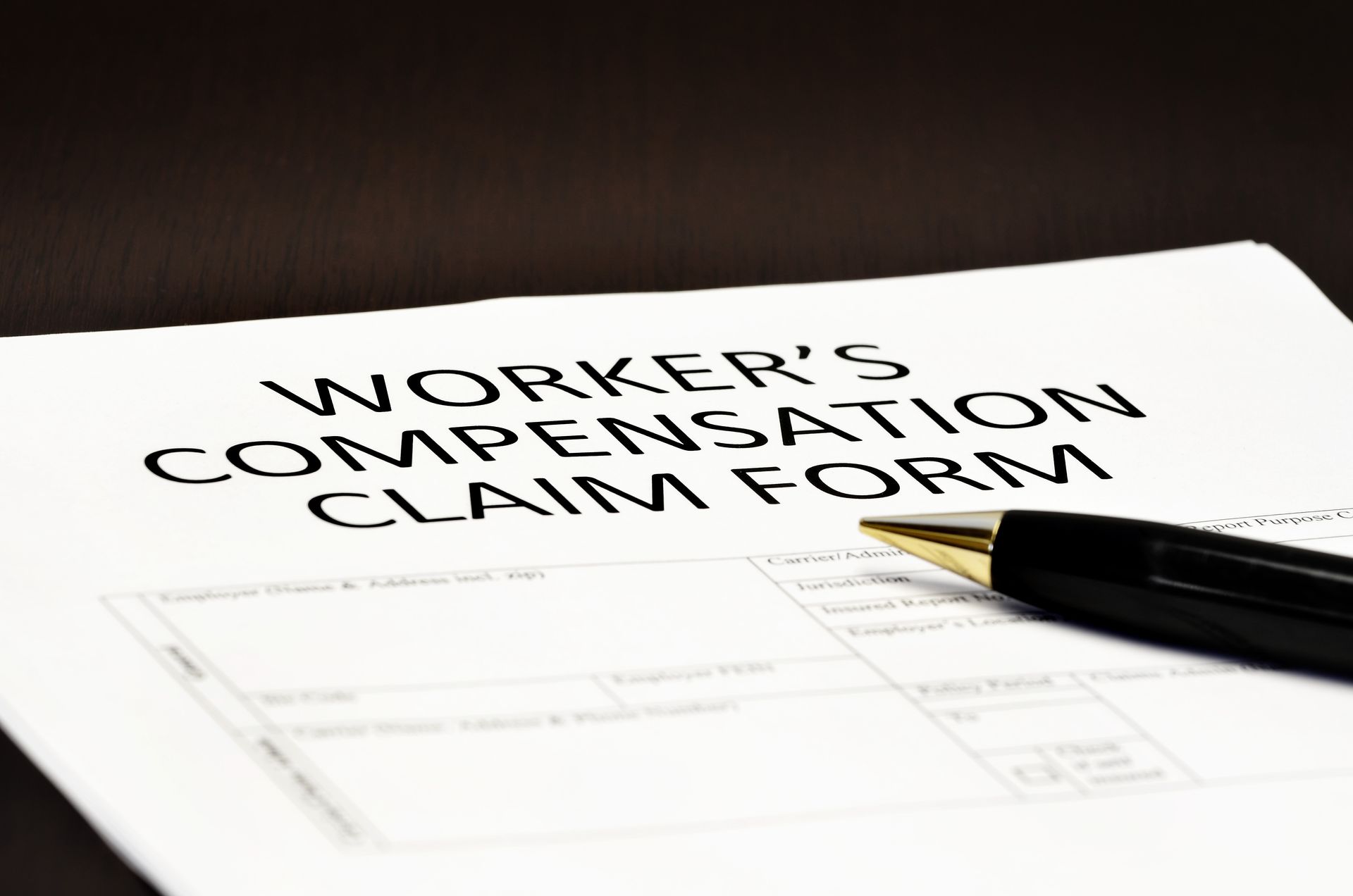
According to the Bureau of Labor Statistics, there were 19,600 reports of workplace injuries in Nebraska in 2021 for private industry employers, with those in the trade, transportation, utilities, or manufacturing industries garnering the highest percentage of injuries.

According to the U.S. Bureau of Labor Statistics, private industry workers reported approximately 2.6 million nonfatal work-related illnesses and injuries in 2021.

In 2021, there were 19,600 workplace injuries reported in the state of Nebraska, according to the U.S. Bureau of Labor Statistics.

According to the U.S. Bureau of Labor Statistics (BLS), falling down in the construction industry is a leading cause of workplace injury and fatality. In 2022, in the construction and extraction (oilfield) industries, there were a reported 24,100 nonfatal injuries from falls.

Under Nebraska law, construction workers who are hurt at the worksite are eligible to pursue compensation for their injuries. However, different issues often arise when the injured party is a non-citizen.

Scaffoldings are often used for many construction projects that require reaching elevated heights. Workers can use the scaffolds to reach high levels to build, repair, clean, or paint structures.

As an injured individual, you may be wondering whether assumption of risk can make you liable for your injuries.

There’s no way to always protect ourselves or the ones we love from getting hurt. Unfortunately, injuries like those sustained from a traffic collision can have lasting effects not only physically but also financially.

Being involved in an automobile wreck can be a traumatic experience, both mentally and physically. Unfortunately, there are some injuries that may not present themselves immediately after the crash but can still cause pain and long-term damage.

Beginning with the U.S. Department of Defense (DOD) in the 1970s, firefighting techniques started incorporating the use of Aqueous Film Forming Foam (AFFF) to suppress oxygen from the blaze.
